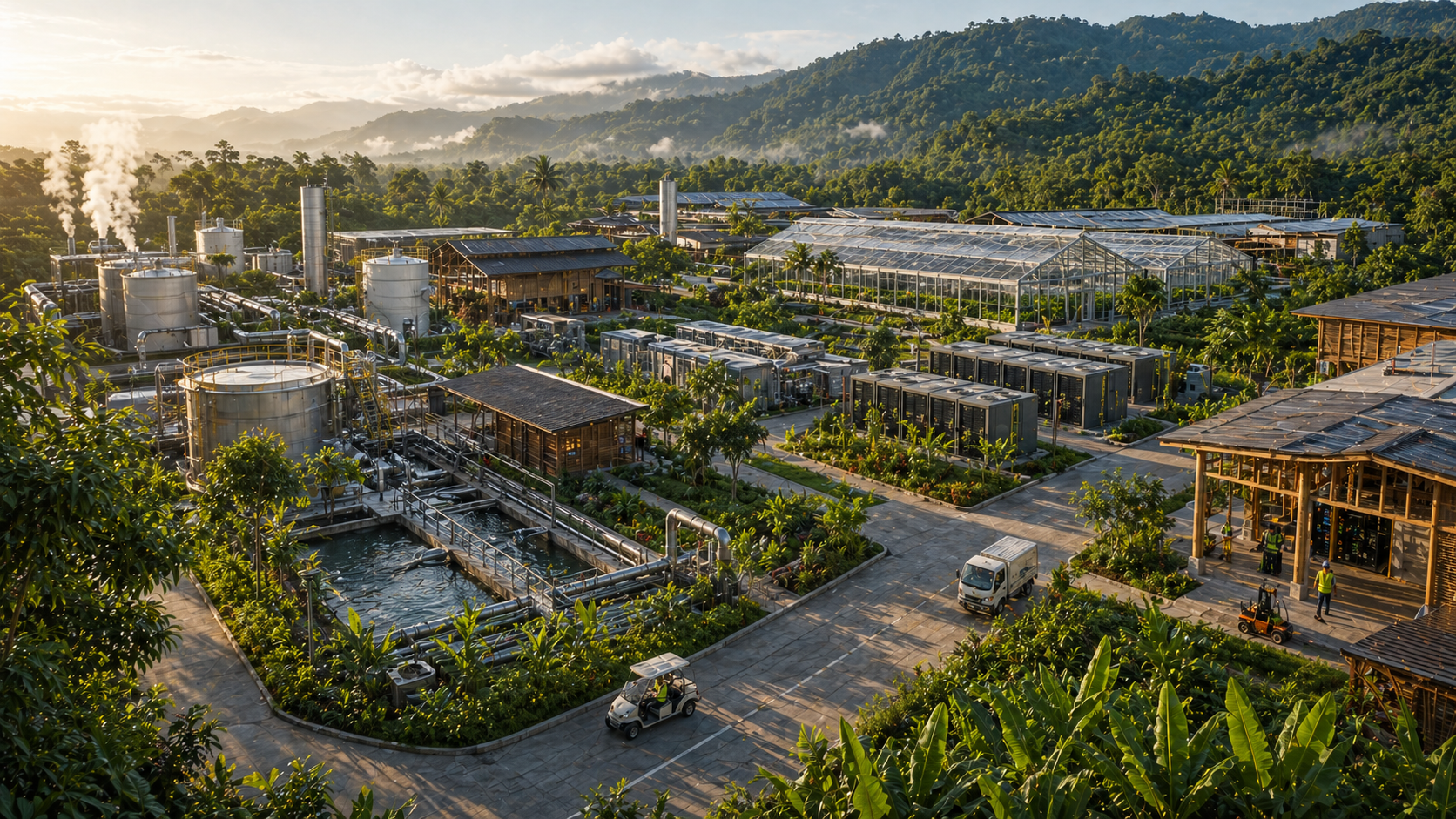
Four Functional Zones
The 35-hectare facility is organised across four functional zones: 25 hectares of advanced greenhouse structures with full climate control for high-value horticultural and leafy vegetable crops; a 3-hectare nursery and propagation facility for seedling production and variety trials; 5 hectares of processing and cold storage for post-harvest handling, grading, packaging, and temperature-controlled storage; and a 2-hectare distribution hub connecting to the logistics district for market dispatch. Greenhouse rooftops carry solar photovoltaic panels that supplement geothermal electricity supply for climate control systems during peak daytime loads.
Replacing External Inputs with Co-Located By-Products
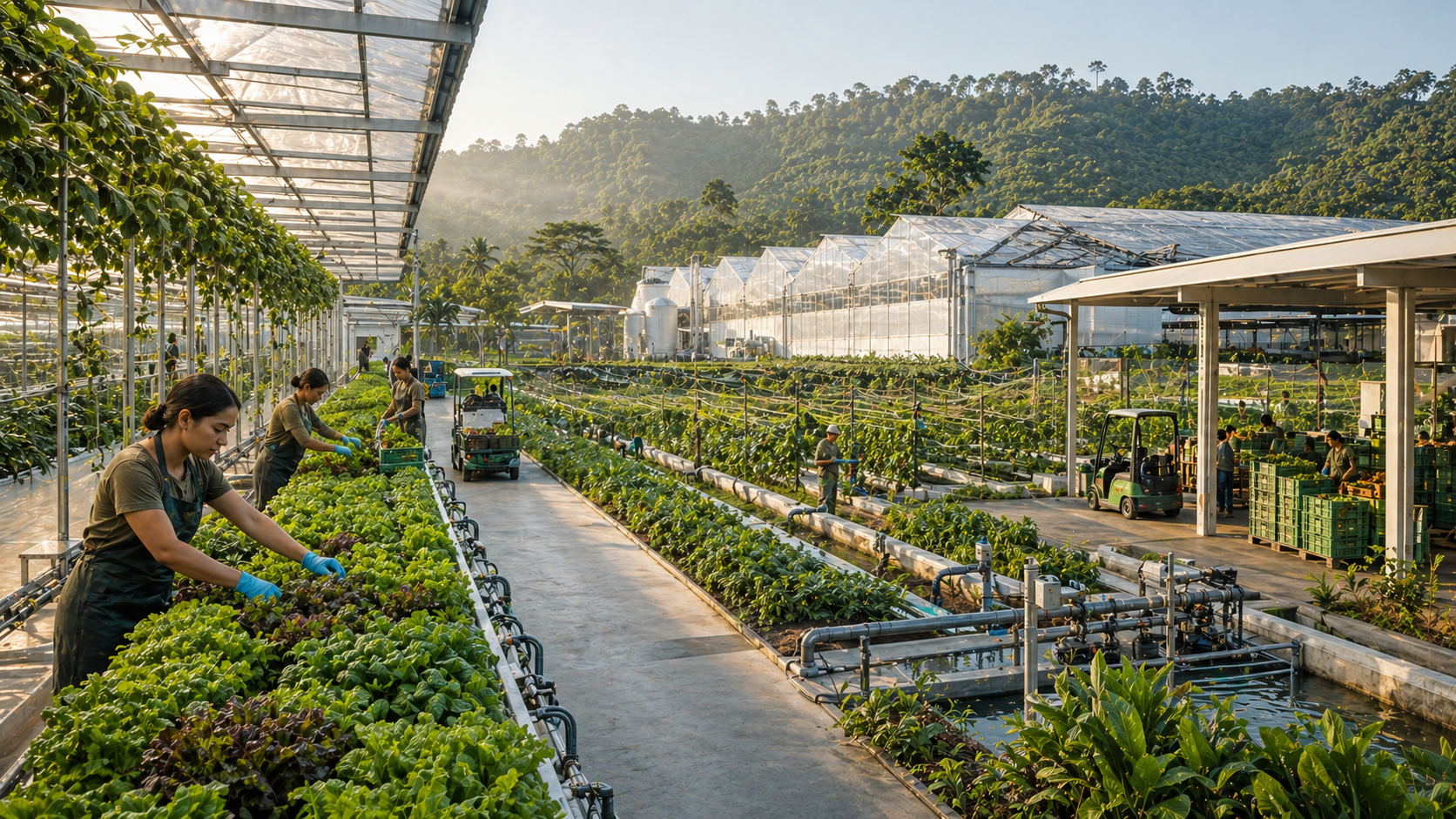
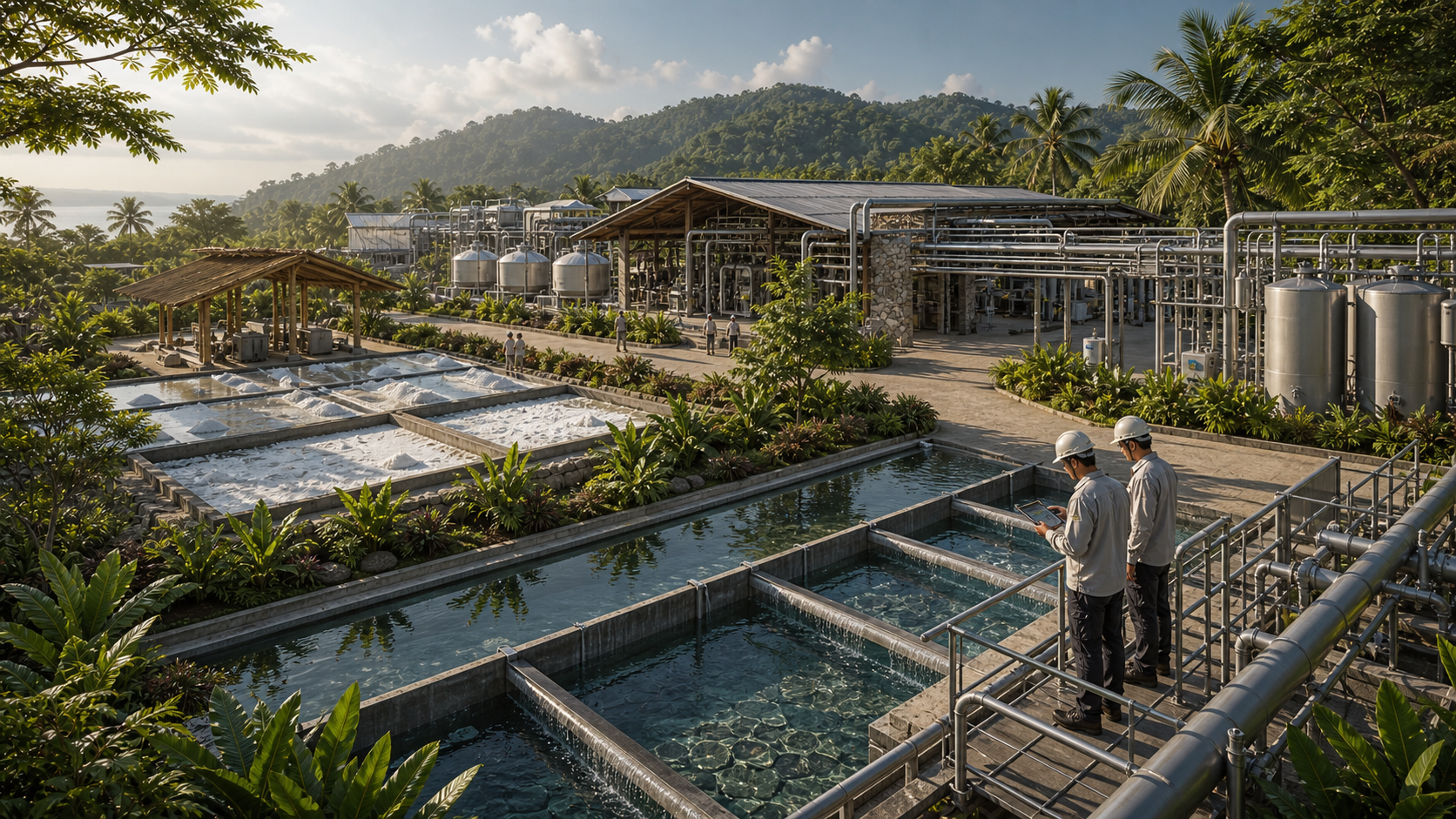
Potassium sulfate and magnesium compounds produced by the brine valorisation plant are supplied as precision fertilisers, replacing imported agrochemicals. Fresh water from the desalination plant is delivered through precision drip irrigation systems that minimise consumption and prevent soil salinity buildup. CO2 captured from industrial processing operations - including fermentation, combustion, and hydrogen production streams - is piped to the greenhouses for atmospheric enrichment. Elevated CO2 concentrations are proven to produce 20-30% higher output compared to ambient conditions. Agricultural waste streams are supplied as feedstock to the HVO biofuel plant, completing a full agricultural cycle in which nothing leaves the district as waste.
Food Sovereignty and Regional Supply
The primary market for agricultural production is the Mentawai One programme itself - supplying fresh produce to the island resort, mainland district workers, and the five academies and culinary facilities on Siberut Island. Reducing dependence on external food supply chains improves the programme's resilience to logistics disruptions and supports the culinary identity of the project by ensuring chefs and restaurants have access to consistent, traceable, locally grown ingredients. Surplus production is distributed through the logistics hub to regional markets, supporting the commercial viability of the facility across the full crop calendar.
Agriculture as Part of the Closed Loop
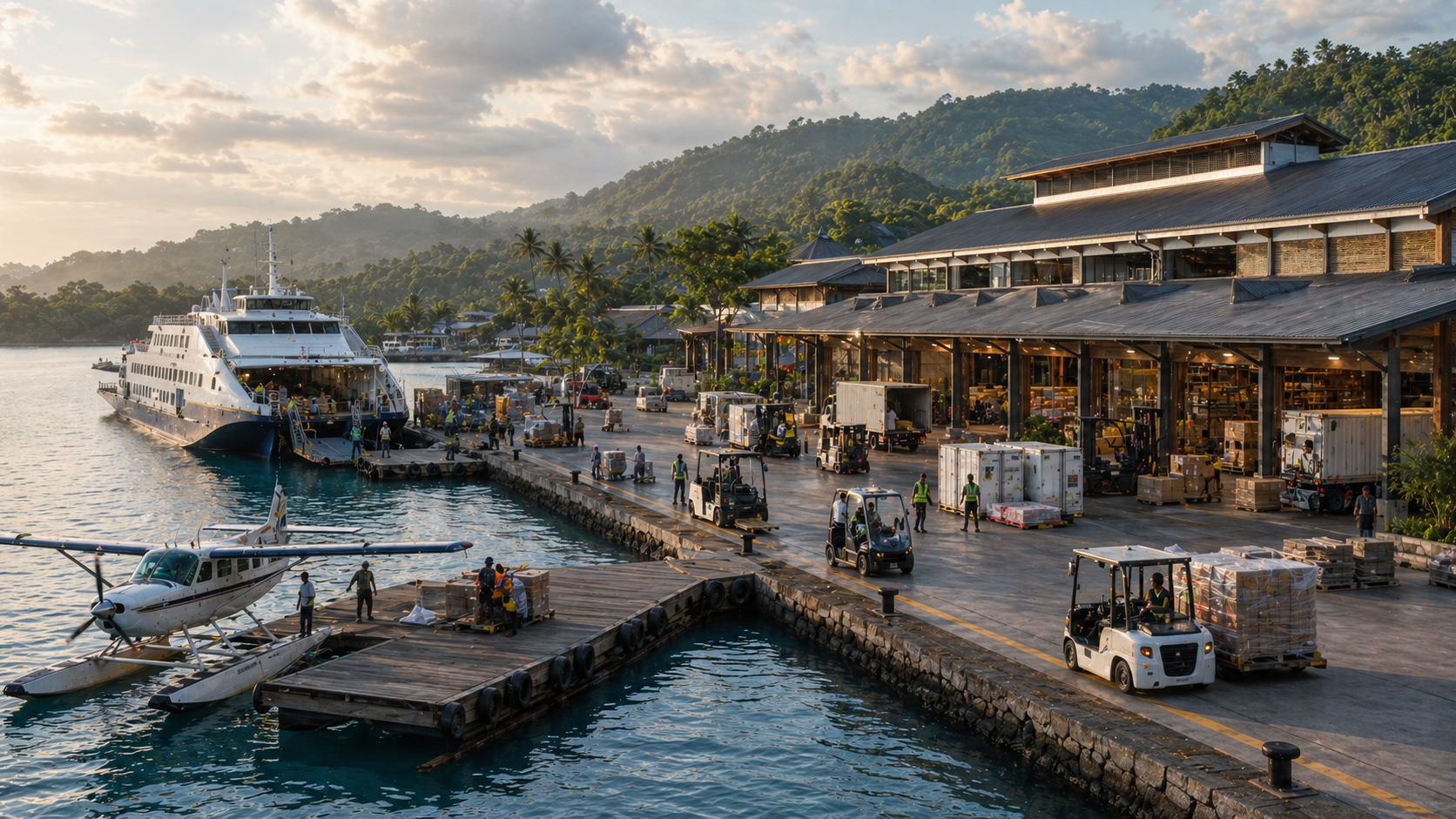
The agricultural district receives its inputs from other mainland operations and returns its outputs - food, fertiliser feedstock, biofuel feedstock - back into the same system. Explore the full ecosystem.