
Geothermal Power: Phased 450-550MW Portfolio
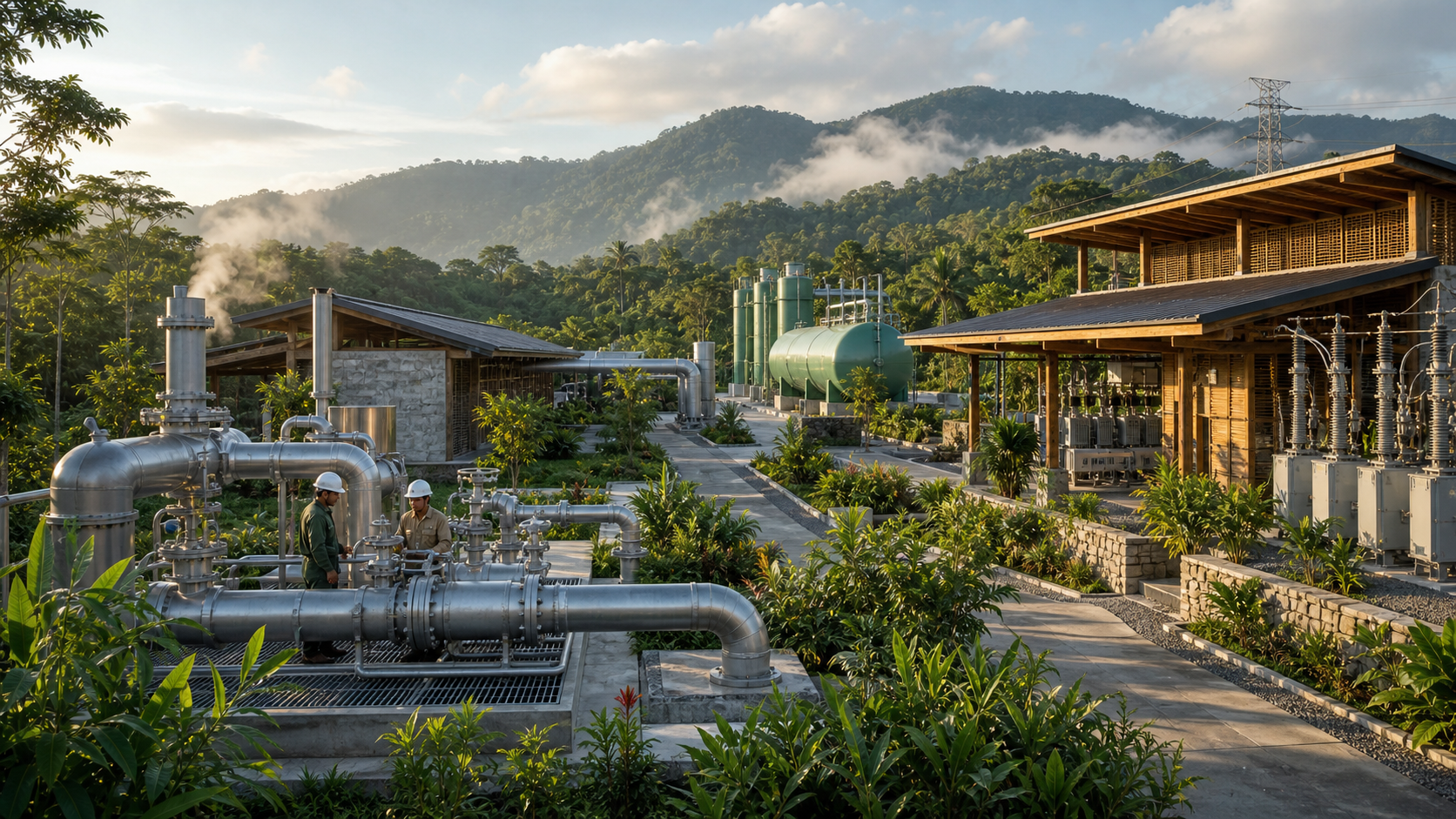
The geothermal programme is planned as a multi-phase 450-550MW generation portfolio, not a single plant. The work programme begins with resource verification, technical studies, and staged drilling, then moves into an initial Phase 2 build-out of approximately 100-150MW before any full Phase 3 expansion to the 450-550MW target. Proven flash steam and binary-cycle technologies form the base case, while enhanced geothermal and closed-loop systems remain pilot or later-stage options subject to independent technical validation. Waste heat recovered from the generation cycle is routed directly to the brine valorisation crystallisation units, reducing the thermal energy requirement for mineral processing.
Green Hydrogen: PEM Electrolysis at Scale
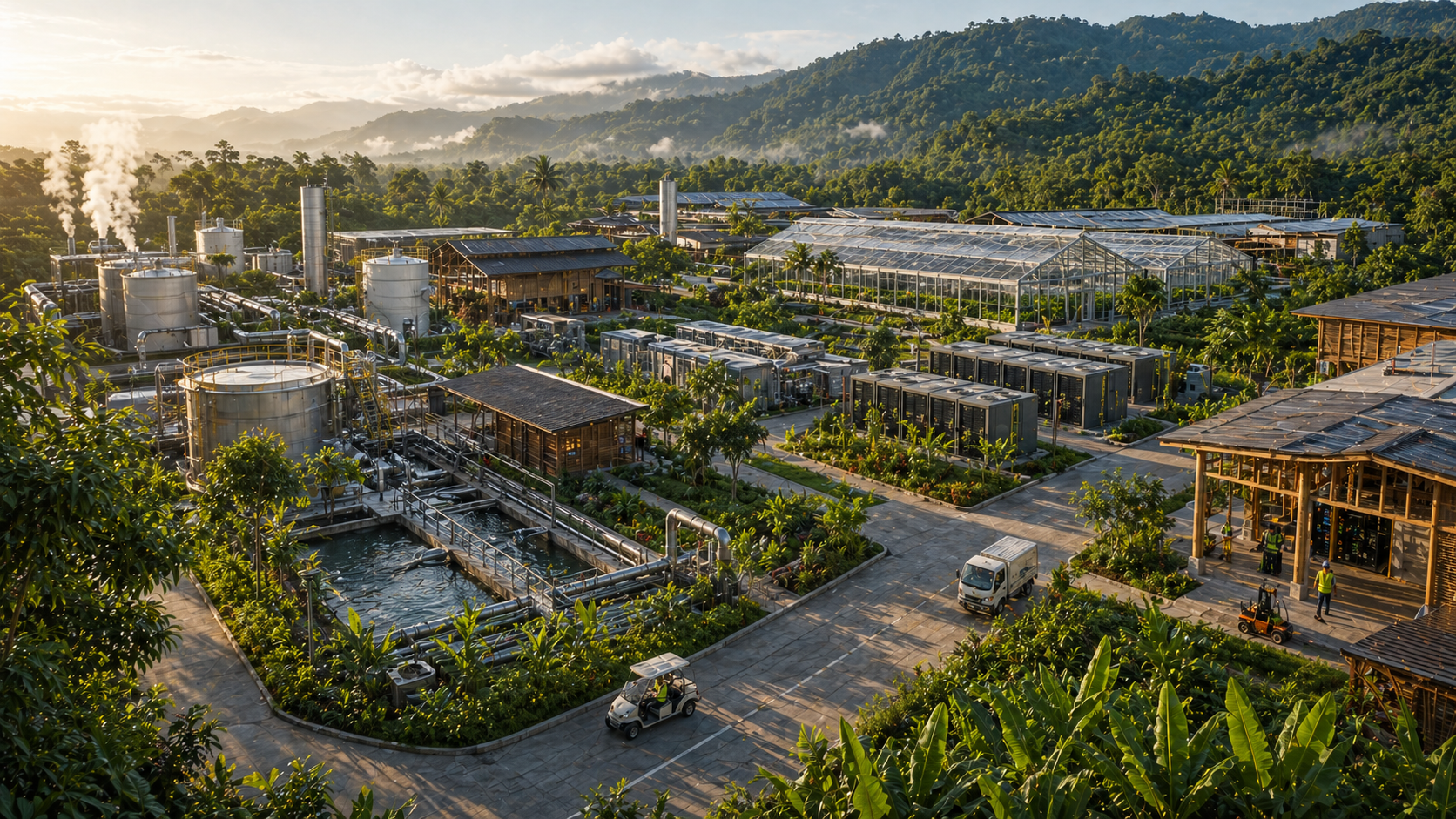
The green hydrogen facility operates PEM (Proton Exchange Membrane) electrolysers at 70-80% conversion efficiency, powered entirely by geothermal electricity. Target production capacity is 10,000 tonnes per year. The electrolysis load - ranging from 55 to 140MW - serves as a flexible demand balancer for the internal grid: when geothermal output exceeds immediate district consumption, excess power is directed to hydrogen production rather than curtailed. Hydrogen is stored at 350-700 bar in on-site pressure vessels. Oxygen produced as a co-product is recovered and supplied to downstream industrial processes, eliminating another external input.
HVDC Submarine Cable: Manufacturing & Transmission
The mainland district includes a dedicated facility for the manufacture of HVDC (High-Voltage Direct Current) submarine cables - one of the most critical and supply-constrained components in the global clean energy transition. The transmission programme is sized around a 300MW initial HVDC rating with a future upgrade path to 400MW, allowing the interconnector to scale with the Phase 2 and Phase 3 geothermal generation ramp. The manufacturing facility serves both the internal programme and the wider regional market - Indonesia's national electrification drive and ASEAN's appetite for cross-border renewable energy trade create sustained demand.
Energy as Ecosystem Infrastructure
The Energy District does not exist to sell electricity alone. It exists to make every other operation in the mainland district more competitive, more sustainable, and more resilient. Renewable baseload power eliminates exposure to fossil fuel price volatility. On-site hydrogen production enables clean industrial processes and transport. HVDC manufacturing demonstrates and supplies the infrastructure of the energy transition itself. Together, these three capabilities position the mainland district as both a beneficiary and a producer of Southeast Asia's clean energy future.
The Foundation of the Closed-Loop System
The Energy District powers every other operation in the mainland district - from desalination to data centres to advanced manufacturing. Explore the full ecosystem.