Mentawai One
24.5°C SIBERUT ISLAND

The Mainland / Water & Minerals

Water & Minerals

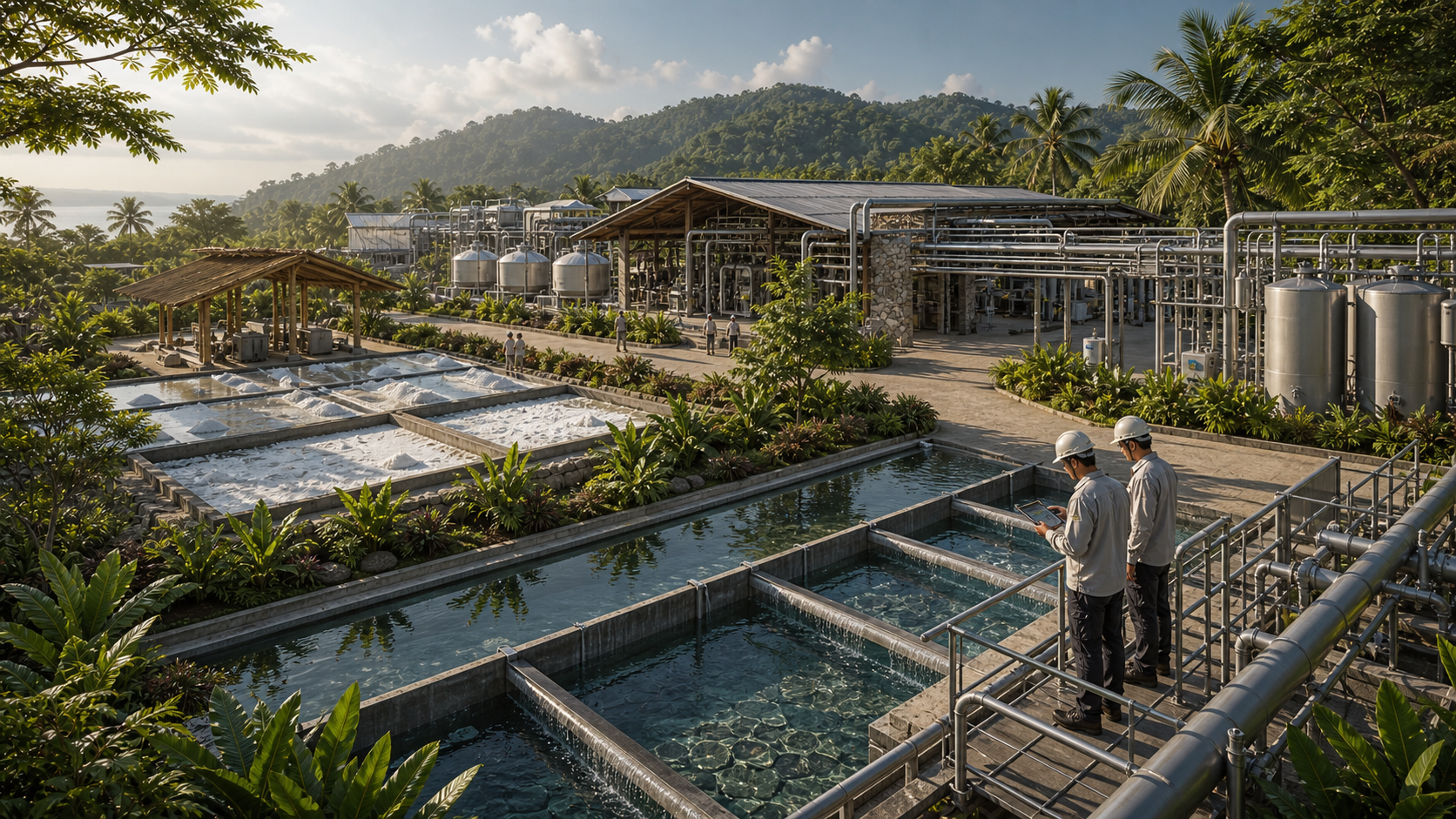
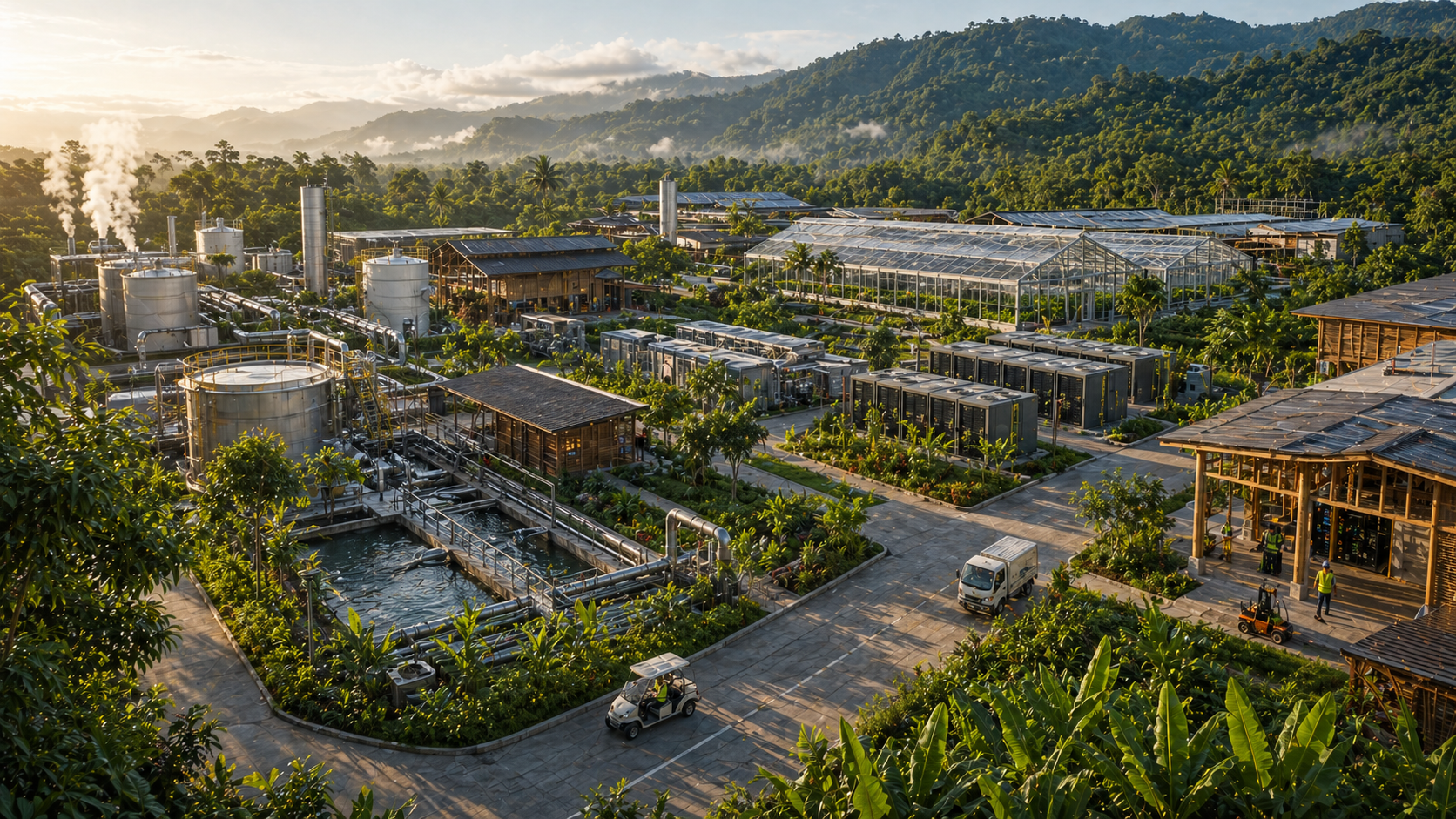
Water is the connective tissue of the mainland industrial ecosystem. The desalination plant converts seawater into two productive outputs: fresh water for industrial cooling and agricultural irrigation, and concentrated brine that becomes the feedstock for a comprehensive mineral processing operation producing pharmaceutical-grade and industrial-grade outputs with zero liquid discharge.

Mentawai One Water & Minerals

Desalination: The Water Engine

The desalination plant operates as a continuous load of 35–50MW, powered by geothermal electricity. Its primary output — fresh water — flows in two directions: to the data centre cooling towers, where it absorbs and dissipates server heat, and to the greenhouse agriculture facility, where it supplies precision drip irrigation across 35 hectares of controlled-environment cultivation.

Cooling water returned from the data centre is not wasted — it re-enters the system at elevated temperature, reducing the re-heating energy requirement for brine crystallisation and demonstrating how the water loop genuinely closes between facilities rather than simply transferring waste from one point to another.

Brine Valorisation: Zero-Liquid-Discharge Mineral Processing

Concentrated brine — a by-product of desalination that most facilities discharge as a pollutant — is the primary feedstock for the brine valorisation plant. Using geothermal waste heat for crystallisation and evaporation, the plant extracts and purifies a portfolio of high-value mineral products:

  • Pharmaceutical-grade salt — produced at approximately 183,000 tonnes per year, meeting pharmacopoeial purity standards for medical and food applications
  • Magnesium compounds — including magnesium chloride and magnesium hydroxide, used in industrial, agricultural, and pharmaceutical applications
  • Potassium sulfate — a premium fertiliser input supplied directly to the on-site greenhouse agriculture facility
  • Lithium carbonate — extracted from lithium-bearing brine fractions, supporting battery supply chain demand

The zero-liquid-discharge approach means no brine is returned to the sea and no liquid waste is produced at any stage of the process. Every fraction of the feedstock becomes a product or is recycled back into the system.

Minerals as Manufacturing Inputs

The mineral outputs of the brine valorisation plant do not merely leave the district as export commodities — they feed directly back into other mainland operations. Potassium sulfate and magnesium compounds are supplied to the greenhouse agriculture facility as precision fertilisers, replacing imported agrochemical inputs. Construction-grade minerals produced as part of the brine processing are incorporated into the SYSTEM 3E modular building system, reducing the requirement to import construction chemicals.

This internal supply chain logic — where one facility's output is another facility's input — is the mechanism by which the mainland district achieves meaningful cost reduction and environmental performance that would not be possible if each operation were developed and managed in isolation.

Environmental Integrity

The water and minerals operation demonstrates that industrial mineral production can be conducted without marine discharge, without chemical waste streams, and without reliance on fossil fuel processing energy. The combination of geothermal power, closed-loop water systems, and zero-liquid-discharge processing establishes a standard of environmental performance that meets — and in most respects exceeds — B Corp and international ESG benchmarks for extractive processing operations.