An Evolutionary Laboratory
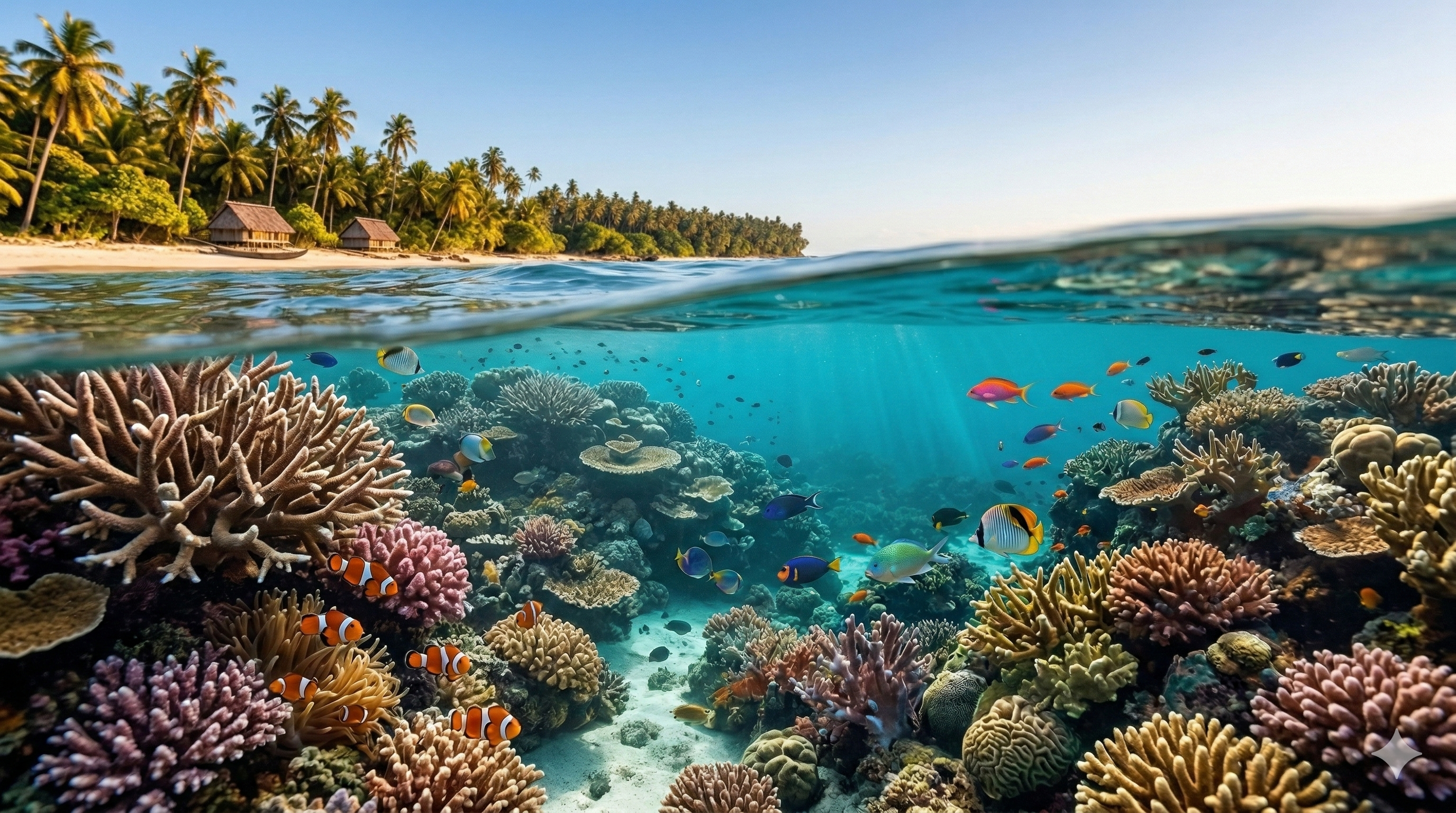
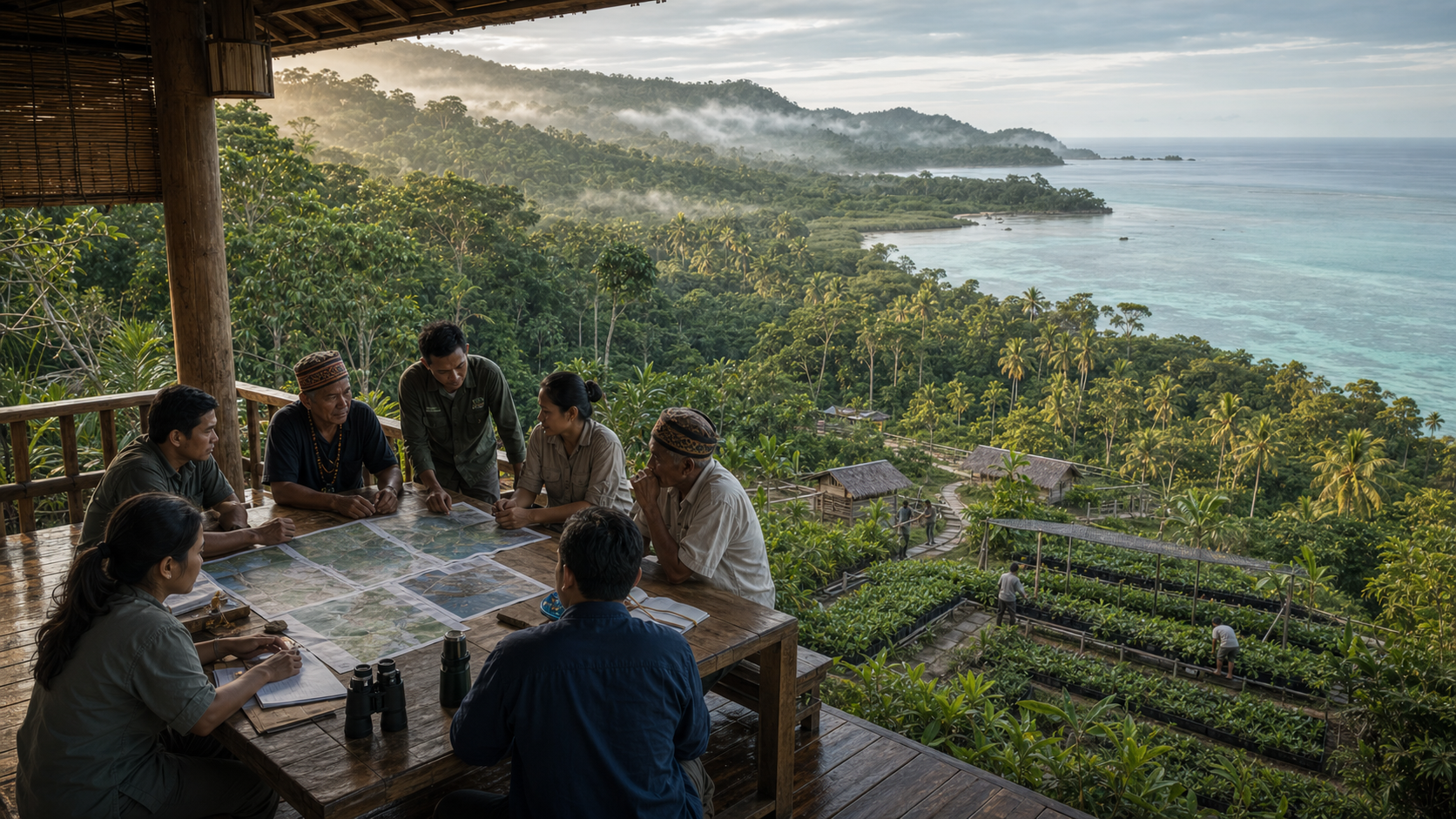
Separated from the Sumatran mainland for at least 500,000 years, Siberut has evolved species found nowhere else on Earth. Four endemic primate species - the Kloss gibbon, Mentawai langur, Mentawai macaque, and Siberut pig-tailed langur - are all classified as vulnerable or endangered. The island's forests are among the most floristically diverse in Southeast Asia.
The Mentawai People
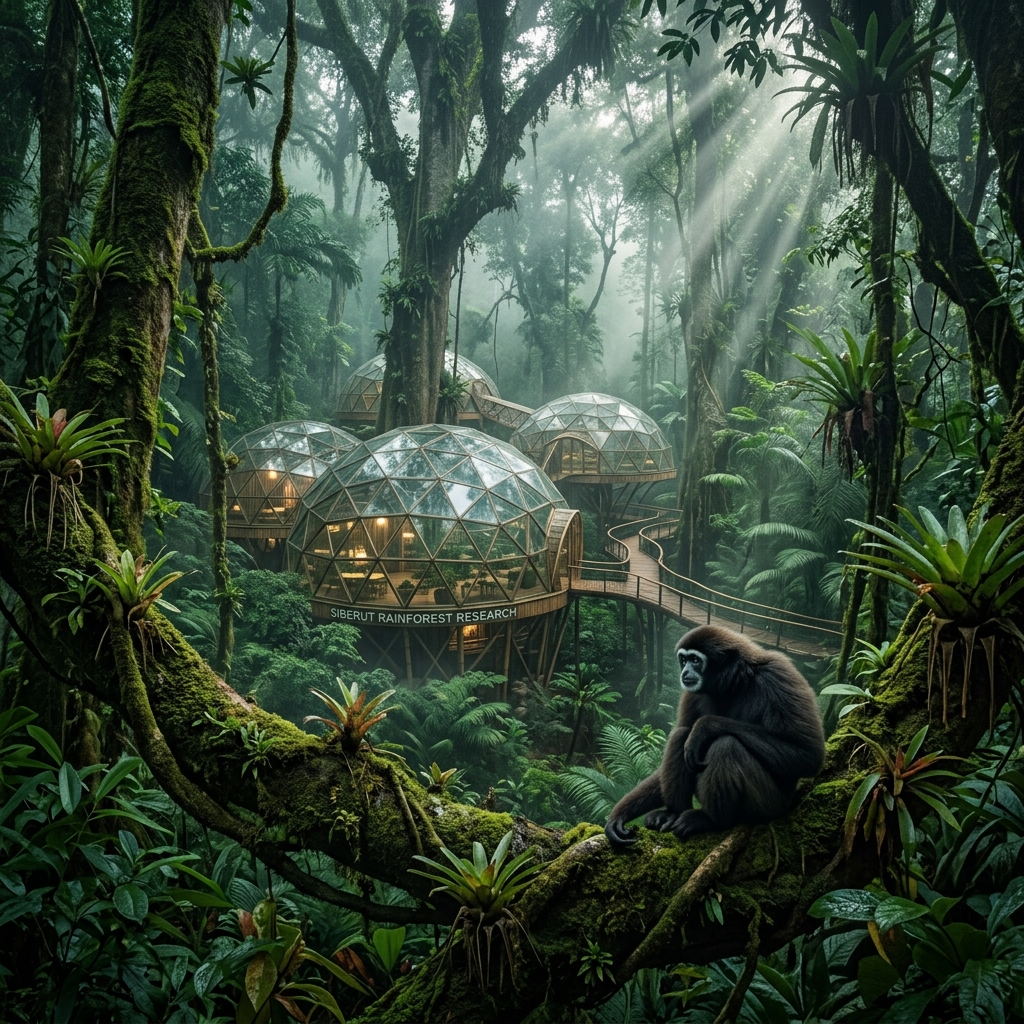
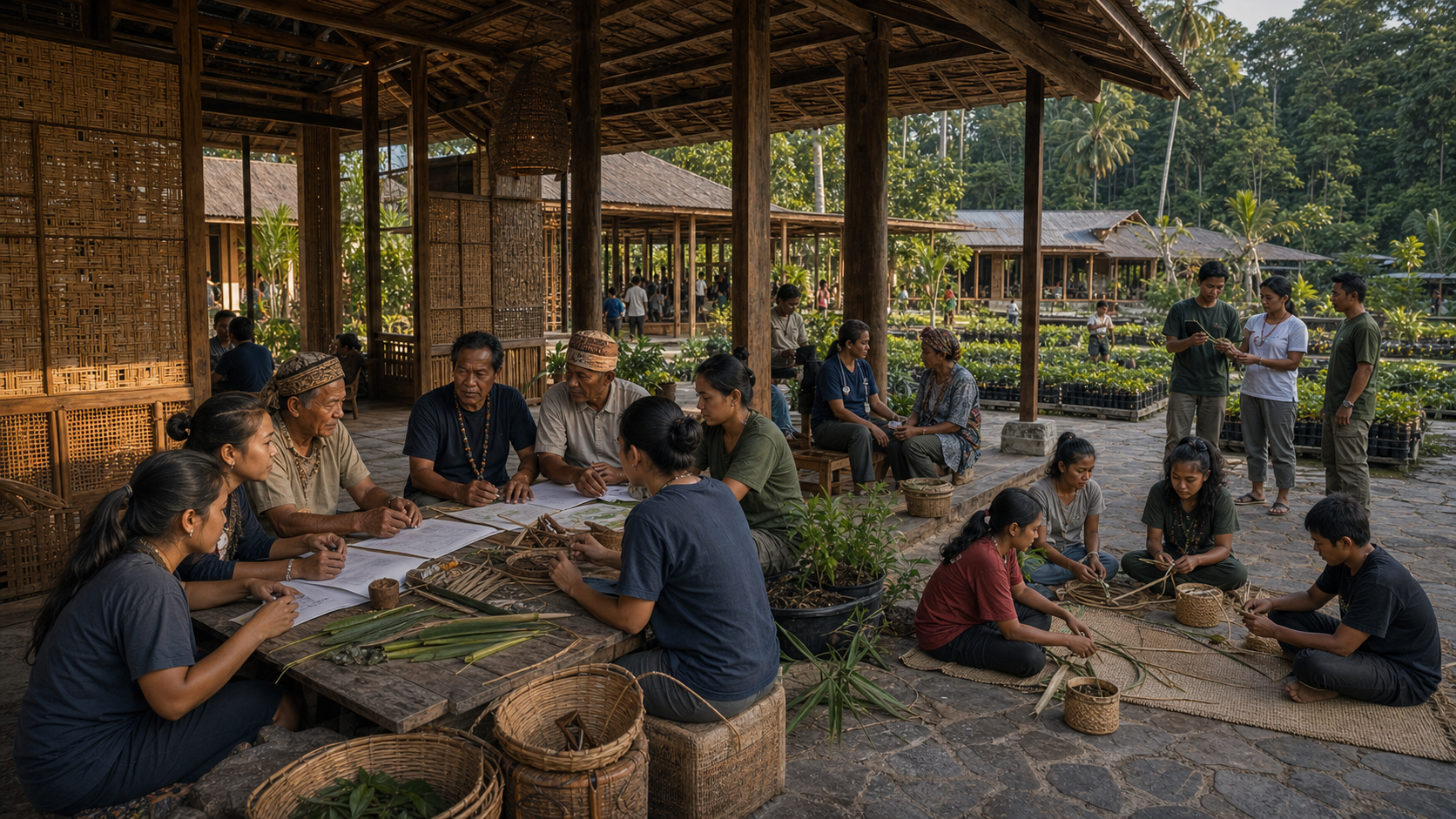
The indigenous Mentawai people have inhabited these islands for thousands of years, maintaining a way of life deeply intertwined with the forest. Their knowledge of medicinal plants, sustainable hunting practices, and ecological stewardship represents an irreplaceable cultural heritage. Any development model must respect and protect these traditions.
From 48% to 85%
The Siberut National Park currently protects roughly 190,500 hectares - approximately 48 per cent of the island. The Mentawai One programme targets expanding this to 342,805 hectares, or 85 per cent of Siberut, through direct conservation funding generated by the industrial ecosystem. This would represent a net gain of over 152,000 hectares.
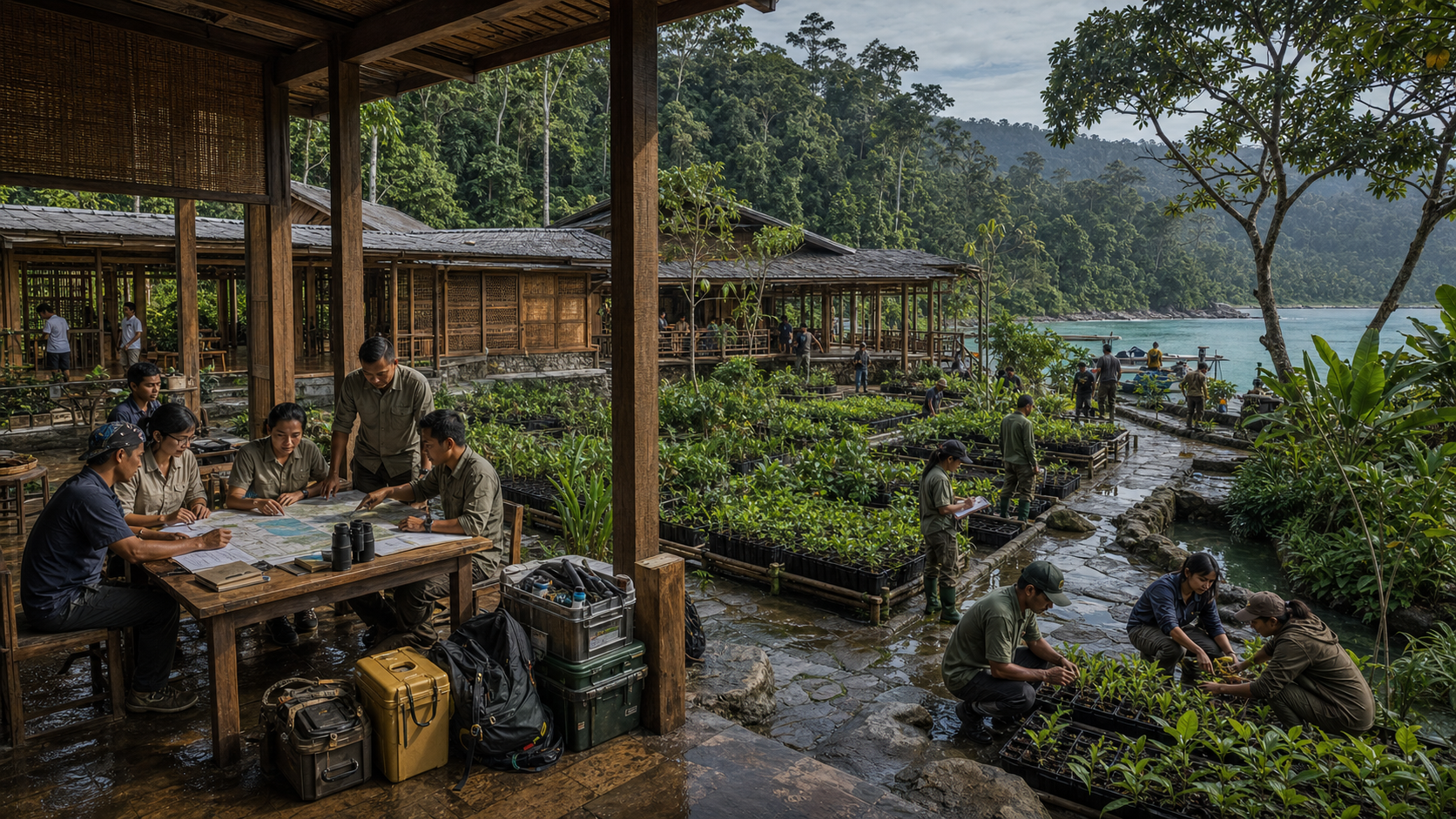
Conservation Is the Destination
Industrial profits fund permanent protection. Every partner contributes to expanding Siberut's protected area and supporting indigenous stewardship.